


The Sands of the Trois Pignons Massif
Presentation
Following the fires that occurred in July, the Trois Pignons area remains temporarily closed to the public for safety reasons.
The Fontainebleau Forest is now 90% open to the public. However, following the fires, the affected areas of the forest—such as the 3 Pignons sector—as well as safety “buffer” zones, remain closed to the public for safety reasons.
Other areas of the Fontainebleau Forest, such as the Hippodrome de la Solle, the Rocher Canon, and the Tour Denecourt, remain accessible and offer numerous opportunities for walks, hikes, and sports activities, allowing you to fully enjoy the forest’s natural beauty!
Before heading out, feel free to check the interactive map of open and closed areas available below.
You might also be interested in other less-visited sites, such as the “Saharan dunes” accessible from the Grands Feuillards parking lot, or “Mont Blanc” in the Commanderie massif.
***
From the entrance to Noisy-sur-Ecole, it takes about 20 minutes to reach the sand dunes via the Chemin de la Plaine de Jean des Vignes. It’s a must-see in the Fontainebleau Forest.
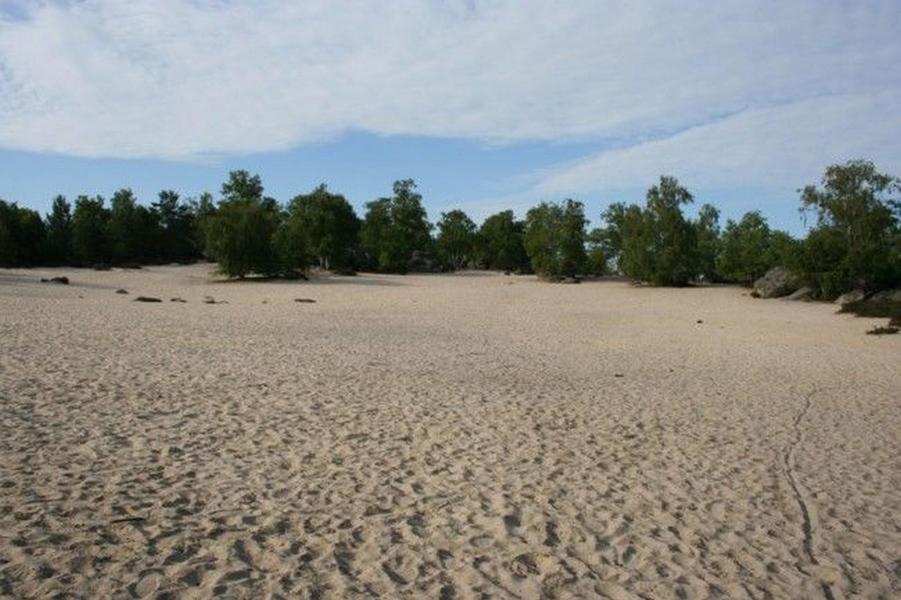
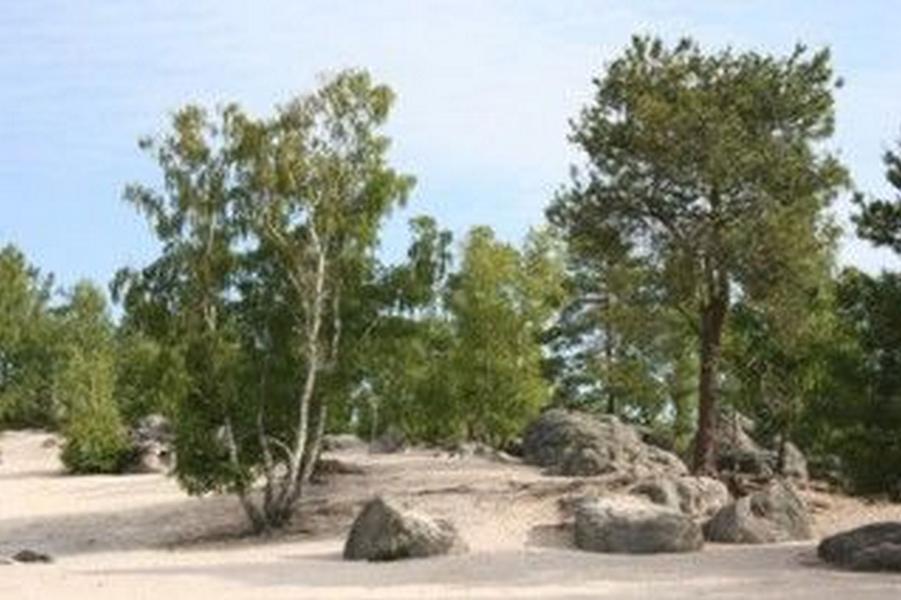
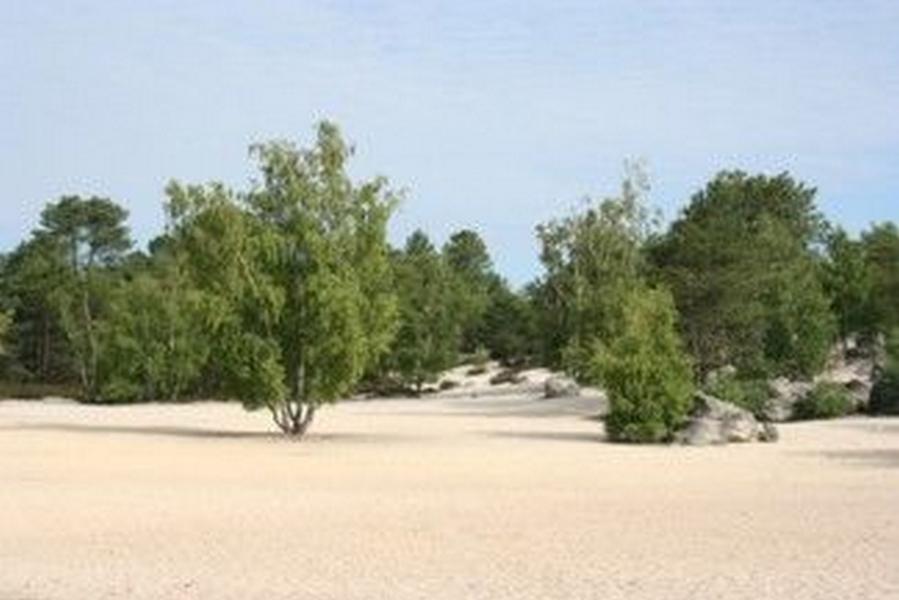
There you’ll find a sea of sand: the “Sables du Cul du Chien,” surrounded by trees and rocks, which are very popular with hikers, rock climbers, and horseback riders.
This geological curiosity—a vast beach without a sea—is located right in the heart of the national forest. Its origin is due to the geological evolution of the area: 30 million years ago, an ocean of warm water covered the site, depositing quartz at the bottom, which later broke down into sand.
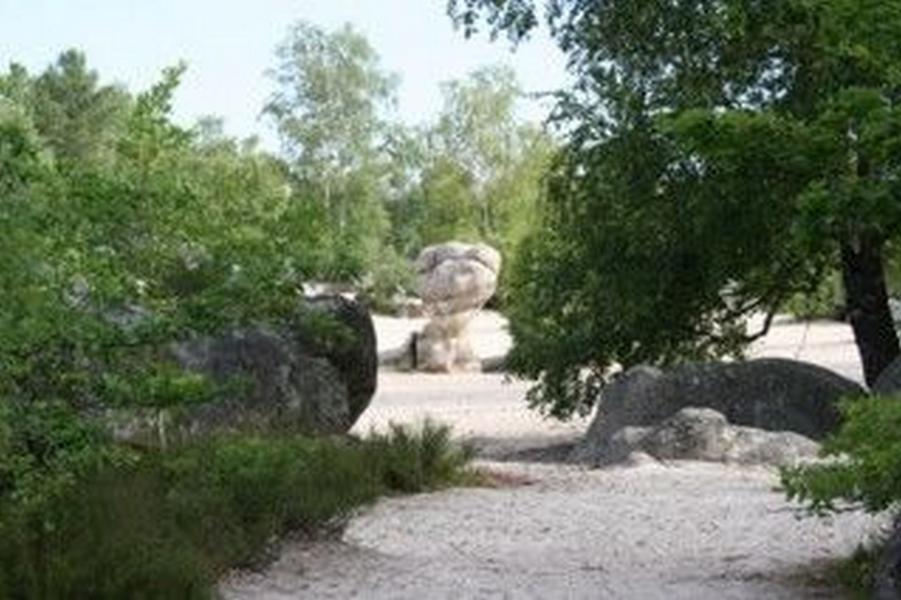
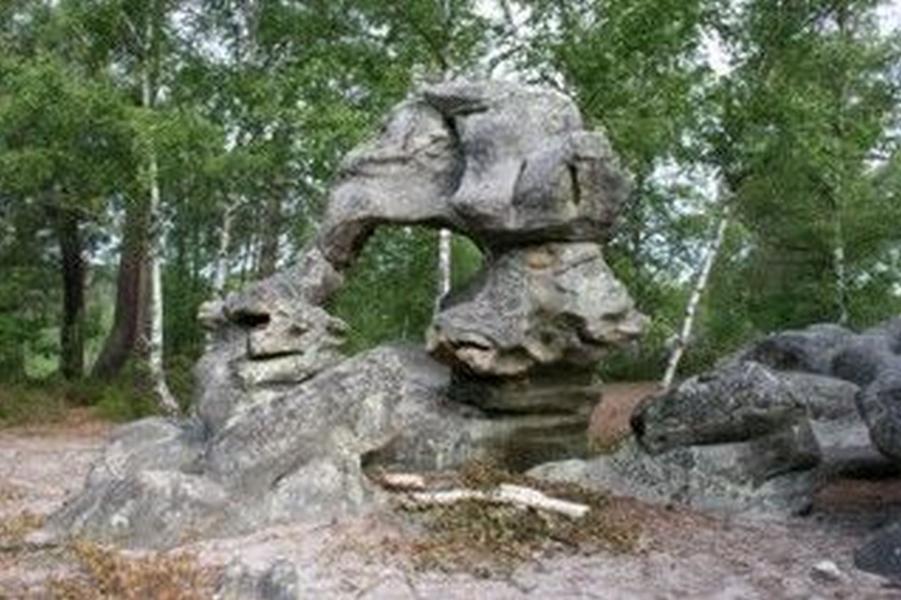
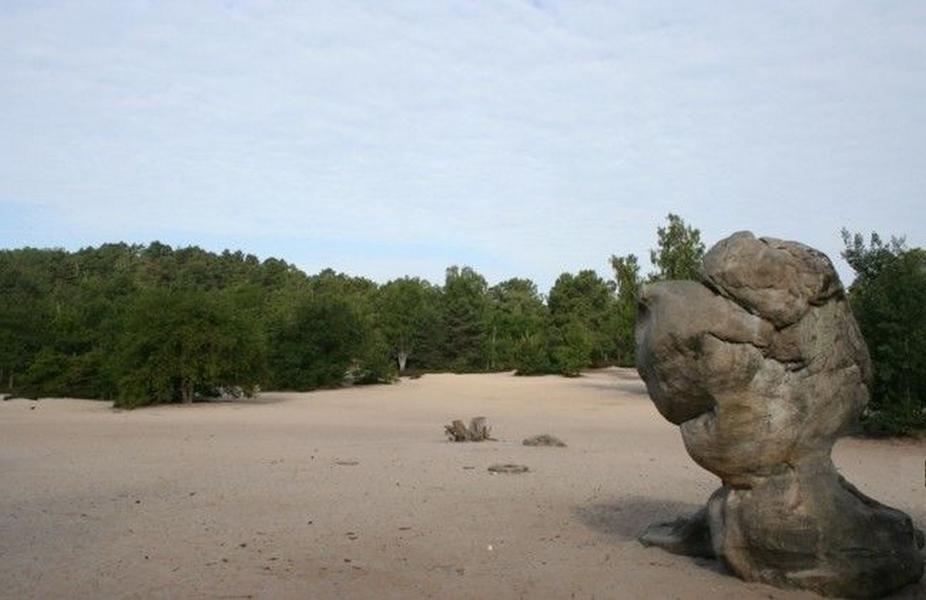
Surrounding this vast sea of sand are sandstone boulders of all sizes. Among them is the most famous one: the “bilboquet,” standing alone in the sand.
Free access.
All year round, daily.
Equipements :
Parking nearby
Services :
Pets welcome
Langues parlées :
French
Tourisme adapté :
Not accessible in a wheelchair
| File | |
|---|---|
| Download |