

Church Notre-Dame-de-la-Nativité

Presentation
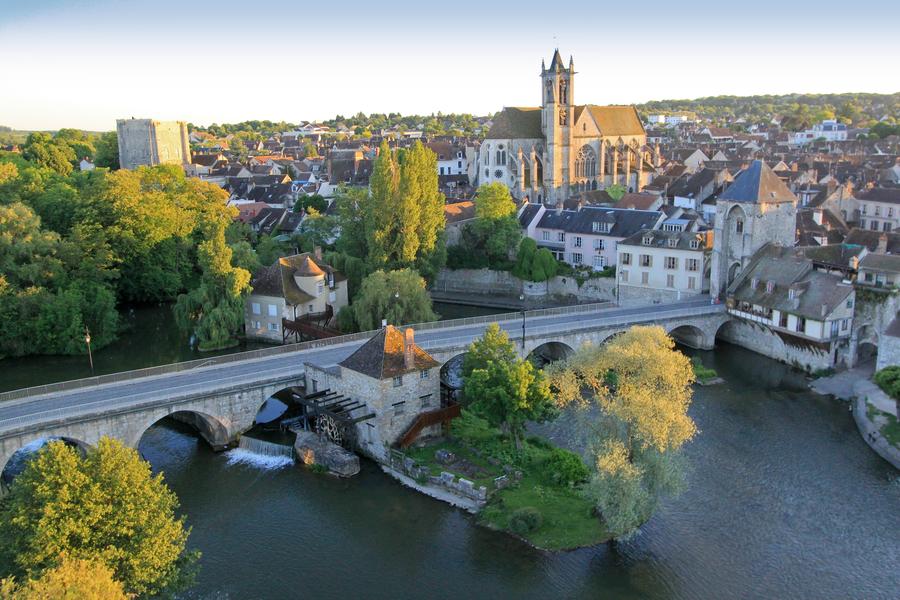
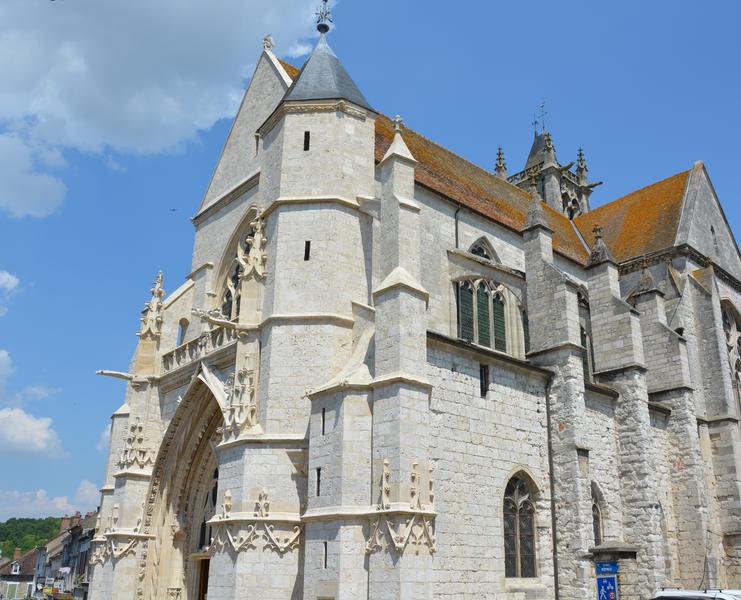
The Church of Notre-Dame-de-la-Nativité is a Gothic building whose construction spanned just over two centuries, from the 12th to the 15th century. It was designated a Historic Monument in 1840 and again in 1921.
The construction of the church lasted just over two centuries, from the 12th to the 15th century, on the site of a former Romanesque church. It was built by King Louis VII and, according to local legend, consecrated in 1166 by the renowned Thomas Becket, Archbishop of Canterbury, who was then living in exile in Sens.
The apse, without an ambulatory, together with the choir and transept, were built in the 13th century over three levels and were inspired by Notre-Dame Cathedral in Paris. The nave was erected in the 14th century. The final bay, façade and portal, dating from the 15th century, are in the Flamboyant Gothic style.
A richly decorated bell tower was added to the north side of the choir at that time. Unfortunately, its foundations were insufficient to support such a heavy structure, causing the tower to lean dangerously. In 1697, the interior openings had to be filled in to prevent the choir from collapsing.
The large Gothic Rayonnant stained-glass window in the transept showcases the artistic mastery achieved in the mid-13th century.
The explosion of the Moret bridge on 24 August 1944 destroyed almost all of the church's stained-glass windows. Only a few fragments of the original windows survived. The large stained-glass window in the Church of Notre-Dame-de-la-Nativité dates from 1956 and was designed by architect Albert Bray and master glassmaker Henri Bray.
In September 2018, following a year of restoration work, the church's façade was officially inaugurated once again.
Inside the church is an organ whose gallery dates from the 15th century and whose case dates from the 16th century (between 1530 and 1540). Nothing is known about the original instrument. A new organ was installed in the historic case in 1664. Following the French Revolution, neglect and vandalism took their toll on the instrument, and the remaining pipes were sold in 1870. The organ was subsequently restored and rebuilt between the 1990s and 2000s, before being officially inaugurated in 2002.
Free access.
All year round from Monday to Saturday between 9.45 am and 5 pm. On Sunday between 10 am and 5 pm.
Equipements :
Parking nearby
Services :
Tour free of charge
Langues parlées :
French
Tourisme adapté :
Minimum aisle width of 90 cm
Doors >=77 cm wide