Moret Castle Keep

Presentation
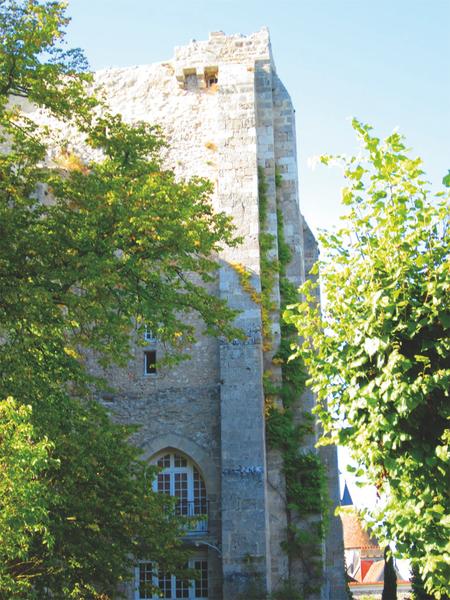
Le donjon de Moret est une ancienne demeure royale construite sur les hauteurs de la ville entre 1128 et 1154 par le roi Louis VI le Gros. Il est inscrit à l’Inventaire Supplémentaire des Monuments Historiques depuis le 28 Avril 1926.
Built by King Louis VI, the Keep of Moret once served as a royal residence, welcoming several kings of France, including Louis VI, Philip Augustus, Saint Louis and Philip IV the Fair.
During the reign of King Henry IV, the estate was leased to various holders of royal grants, the most notable being his Superintendent of Finance, Sully, who undertook extensive renovations, including the creation of formal French-style gardens. Most of the interior fittings date from the time of Jacqueline de Bueil, Countess of Moret and mistress of King Henry IV.
Under the reign of Louis XIV, the Keep was subsequently converted into a royal prison, notably holding Nicolas Fouquet under the guard of D'Artagnan and the King's Musketeers. The last person of royal blood to have stayed at the Keep was Marie Leszczynska, shortly before her marriage to Louis XV at Fontainebleau.
A symbol of royal authority, the Keep was set on fire shortly after the French Revolution, in 1793. It fell into ruin until 1880, when it was acquired by Mr Joanne Thirion, the son of a wealthy industrialist. An art collector, he commissioned architect Pierre-Félix Julien (1840–1914), along with several artists and decorators, including his brother Eugène, a painter from the Academic School and a pupil of Alexandre Cabanel. Together, they transformed the ruined building into a beautiful and comfortable residence.
Several historic architectural features were salvaged and reused during the restoration, including an imposing rose window originally from the parish church of Notre-Dame in Meulan (Yvelines).
The Keep has remained in the same family ever since. Restored in 2006 by heritage architect Louis Prieur, the building combines 12th-century architecture with the Neo-Gothic style introduced by Pierre-Félix Julien, while blending harmoniously into the townscape.
Equipements :
Parking nearby
Services :
Not open to the public
Langues parlées :
French
Tourisme adapté :
Not accessible in a wheelchair