Façade François 1st
Presentation
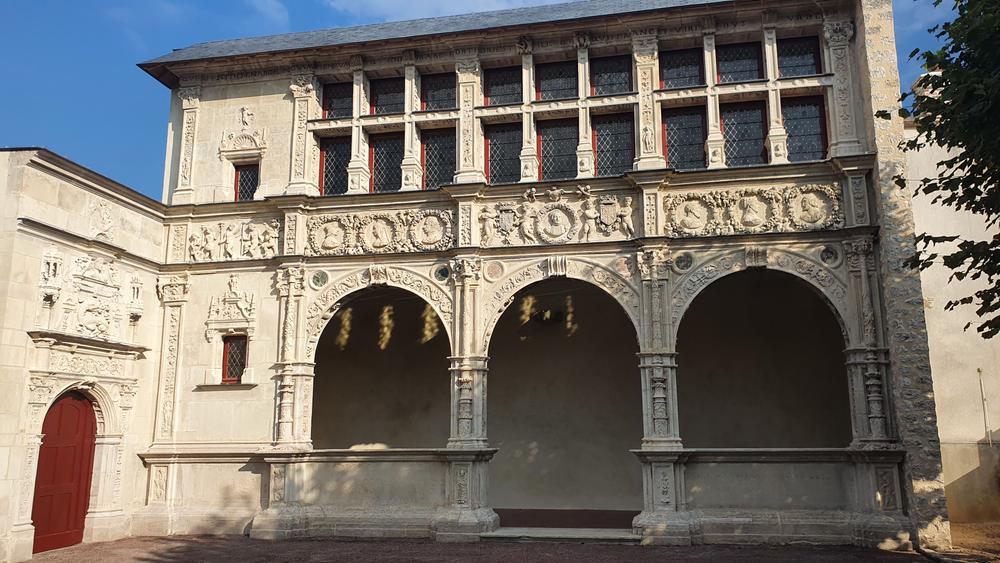
Created by the Renaissance “masters of living stone”, this gallery, known as the “Gallery of Francis I”, is an architectural fantasy commissioned by Nicolas Chabouillé, a wealthy royal official during the reign of Francis I.
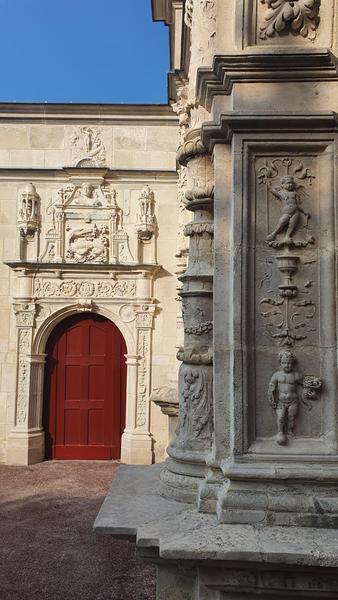
This gallery was built in 1927. The abundance of ornaments, friezes, arabesques, pilasters, festoons, medallions and decorative panels, together with its exuberant detailing, places the building firmly within the Early Renaissance style.
Over the centuries, the house fell into disrepair and was eventually purchased by a cooper, who used it as a storage shed for his timber. In the meantime, it had also been home to a shoemaker, a violinist and a blacksmith, who lived and worked there.
As a gesture of gallantry and admiration for Mademoiselle Mars, an actress, but also with a view to financial speculation, Colonel de Brack purchased the property for 2,000 francs. He then had it transported by river to Paris, to Cours-la-Reine (now Cours Albert Ier), where it was intended to adorn his new private mansion. However, both Mademoiselle Mars and Colonel de Brack are said to have suffered financial setbacks and never lived in the house.
After passing through the hands of several successive owners, the House of Francis I was sold by Count d’Ussel in 1956 to a property development company. The sale was subject to the condition that the façade would be returned to the town of Moret, at the buyer's expense.
In 1957, under the supervision of architect Albert Bray, the façade was reassembled in the courtyard of Moret Town Hall, as it was not possible to return it to its original location. It has been listed as a Historic Monument since 2002.
Free access.
Open every day.
Equipements :
Free car park
Parking nearby
Car park
Services :
Pets welcome
Not open to the public
Langues parlées :
French
Tourisme adapté :
Doors >=77 cm wide