


Notre-Dame-de-l’Assomption Church
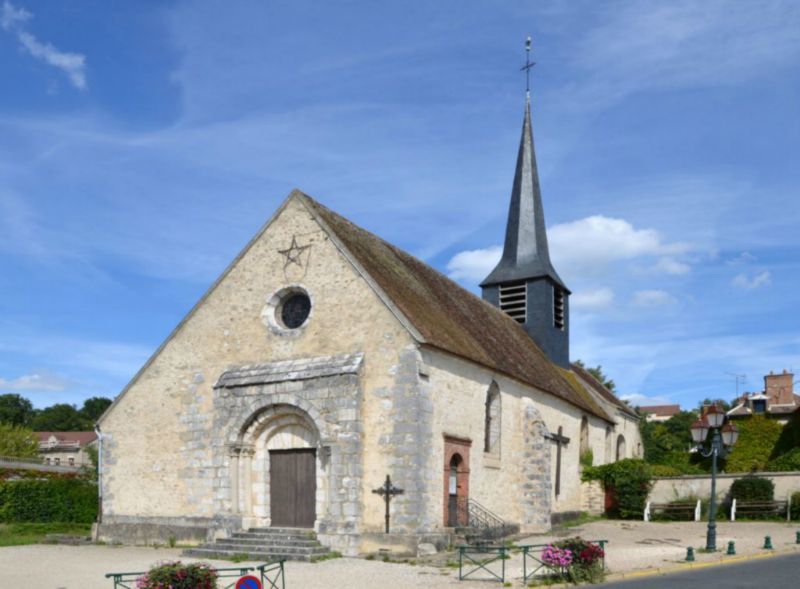
Presentation
This building dates back to the 12th century, with its oldest sections listed as a Historic Monument since 1926.
The Church of Notre-Dame-de-l'Assomption was built in the 12th century, possibly by the Celestines. The choir and west façade are the only surviving parts of the original building. According to local tradition, the church was partially destroyed in the 14th century during the Hundred Years' War and rebuilt in the 16th century. The nave and north aisle date from this period.
The church houses several items listed as Historic Monuments. The oldest is a 14th-century stone statue of the Virgin and Child. The 15th-century holy water font is made from a former stone liquid measure. The altarpiece, a painted stone bas-relief depicting the Passion of Christ, dates from the 16th century and originally formed part of an altar from which it was later removed. The high altar altarpiece, featuring Christ on the Cross, is made of painted wood dating from the 16th and 18th centuries. Two 18th-century polychrome wooden statues of Saint Vincent and Saint Anne complete the collection.
The church bell, named Jeanne-Antoinette, was cast in 1859. Its upper rim features a bunch of grapes, symbolising the cultivation of Chasselas grapes, which was flourishing in the area at the time. After developing a crack, the bell was replaced by the one currently in use.
The church is located close to the Seine. A copy of a 1792 map shows that a cemetery once stood in front of the entrance, which was abandoned in 1828. During construction work on the bridge in 1861, skeletal remains were unearthed. The building known as the New Presbytery, located to the north of the church, was once surrounded by vegetable gardens and vineyards.
The Church of Notre-Dame and the surrounding streets bear witness to Champagne's historical presence in the area, dating back to feudal times.
Free access.
Equipements :
Parking nearby
Langues parlées :
French
Tourisme adapté :
Doors >=77 cm wide