

Saint-Césaire ou Notre-Dame-de-l'Assomption Church
Presentation
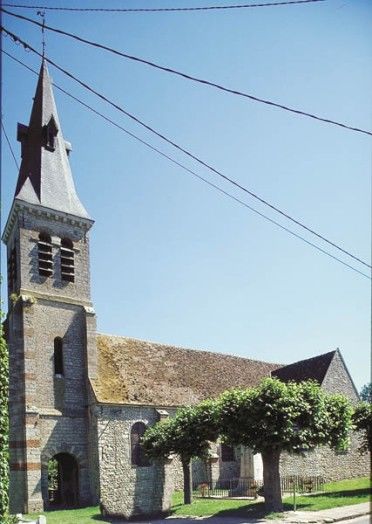
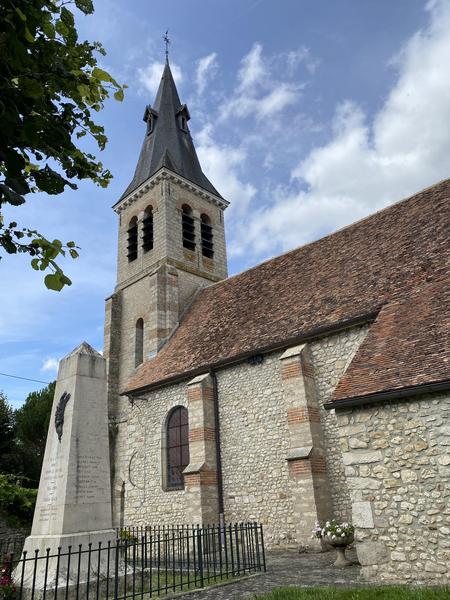
Saint-Césaire Church, also known as the Church of Our Lady of the Assumption, was built relatively late, in the 16th century, following the widespread destruction caused by the Hundred Years’ War.
The font in Saint-Césaire Church consists of a gadrooned basin resting on a baluster-shaped pedestal.
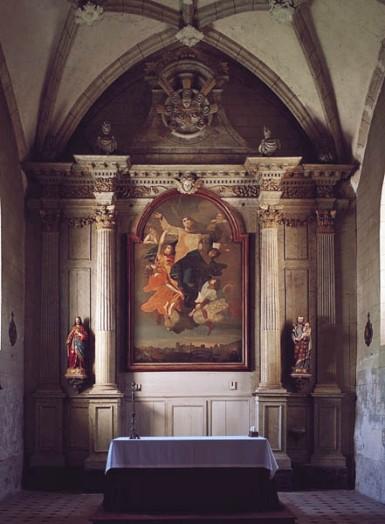
The Assumption altarpiece was carved in 1699 by a local resident of Flagy, who died in 1722.
The church is dedicated to Saint Caesarius (470–542), Bishop of Arles. This is an unusual dedication in the Seine-et-Marne department, evoking the south of France. The inhabitants may have wished to highlight the bishop’s role in securing the independence of the Arles community. Indeed, following the French Revolution, Saint Caesarius may have come to symbolise the desire of local communities to free themselves from royal and imperial authority.
The church features beautiful stained-glass windows, the reliquary shrine of Saint Caesarius, a late 17th-century oak statue of the Virgin and Child, and another reliquary.
The church underwent several restorations during the 19th century. These included the complete rebuilding of the stone bell tower in 1867, funded by the Count of La Tour du Pin.
Free access.
From 01/01 to 31/12/2026, daily.
Equipements :
Parking nearby
Langues parlées :
French
Tourisme adapté :
Doors >=77 cm wide