


Sarah Poncelin de Raucourt / Screen printer


Presentation
Artisanal workshop specialising in screen printing and ethical textile design
Screen printing is a printing technique created in China during the Song dynasty (960-1279).
It developed in the United States in the 19th century as a result of large-scale Chinese emigration. Screen printing spread throughout the printing world and its technique was modernised. It spread to Europe during the Second World War and subsequently became a new means of expression.
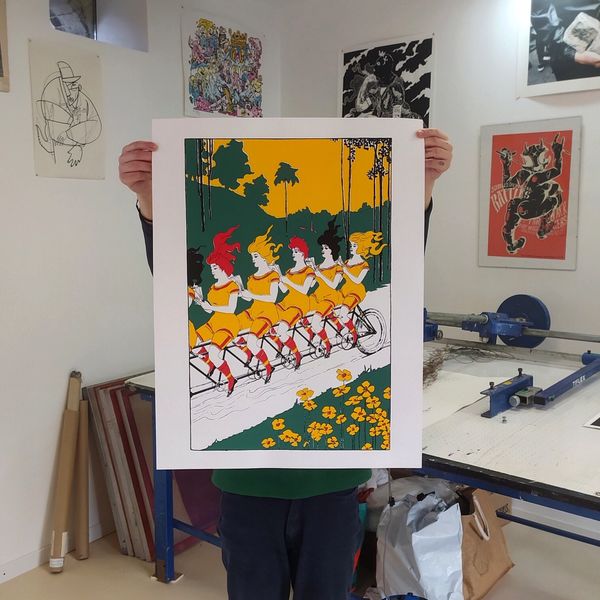
Screen printing can be used on a wide range of substrates: paper, textiles, printed circuit boards, glass, ceramics, wood and metal.
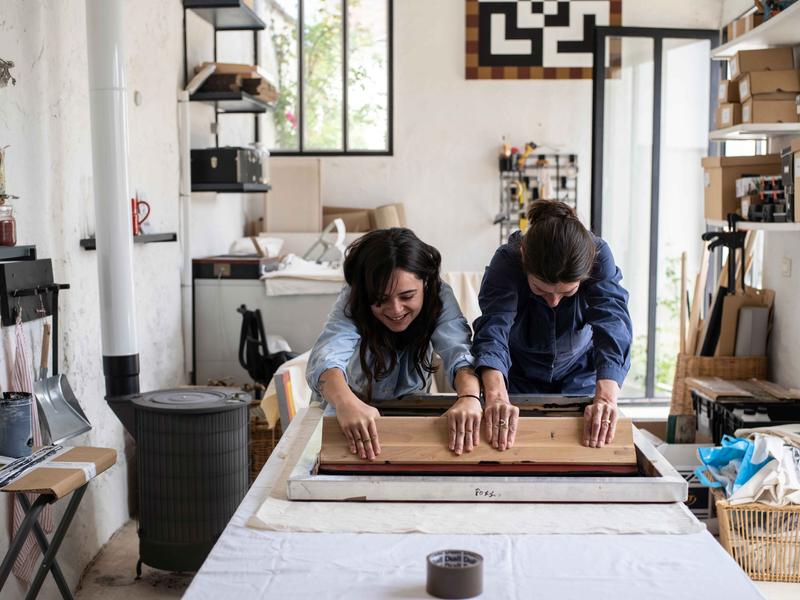
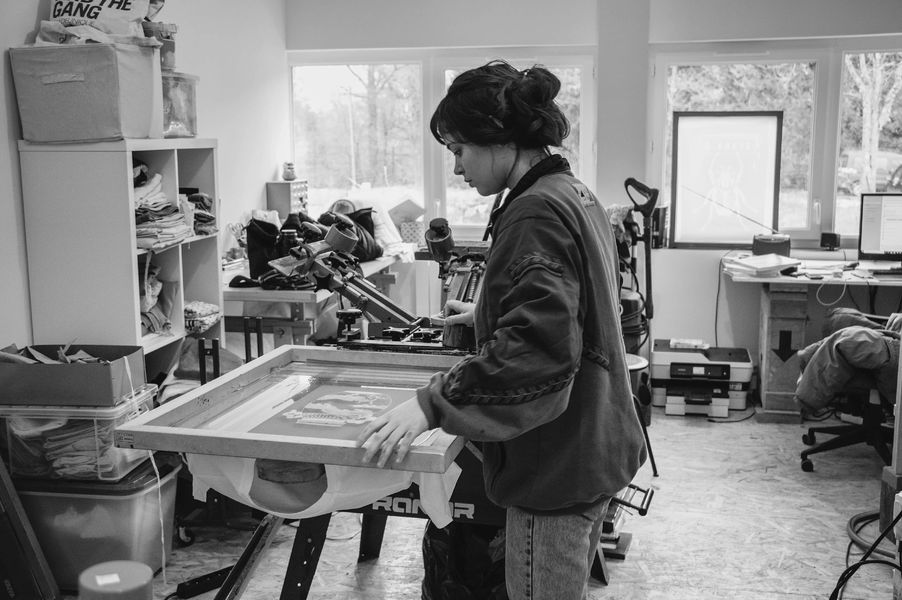
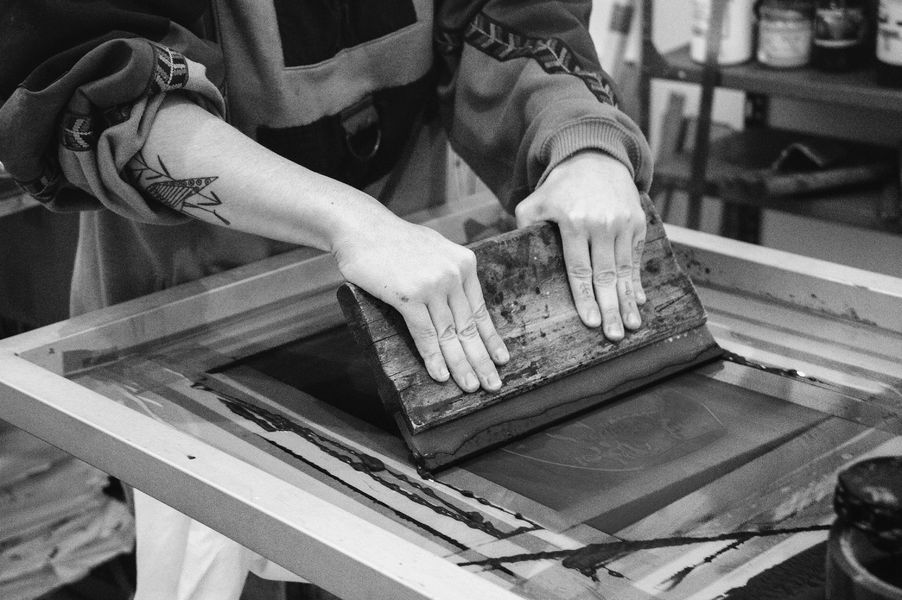
The technical process involves several stages: an image is created (drawing, collage, photograph, etc.), a screen is coated with a photo-sensitive emulsion and left to dry in the dark. During this time, the drawing is passed over a transparency. Once the screen is dry, place the transparency over the screen and put the screen in front of the UV lights so that the emulsion hardens where the transparency lets the light through. A few seconds later, the screen is rinsed with water and the design on the transparency appears. The stencil is created. All that's left to do is place the support, put the screen on top, apply the ink to the screen and scrape.
Translated with www.DeepL.com/Translator (free version)