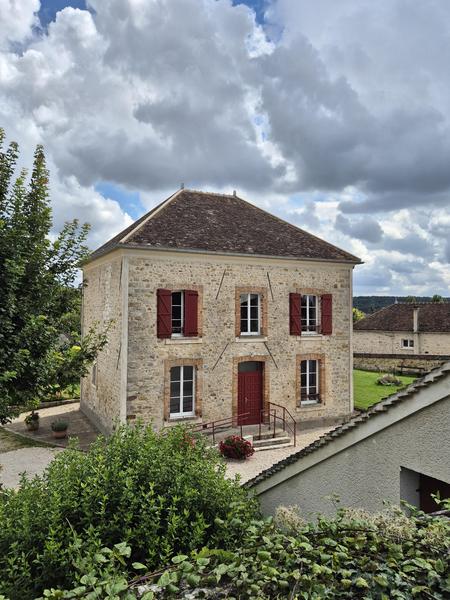
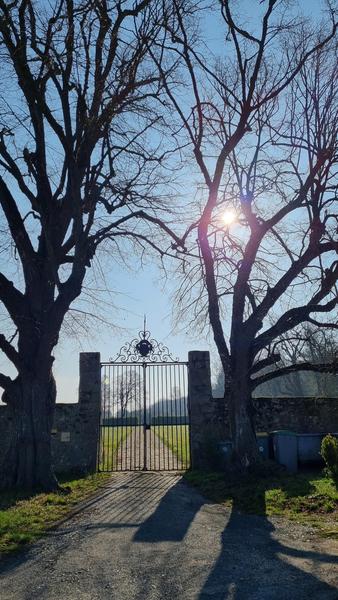
Château de Saint-Ange ou de Challeau
Presentation
Saint-Ange Castle in Villecerf was built from 1543 onwards under the name Châteauneuf de Challeau. It has been partially listed as a Historic Monument since 1926.
The château was built by Anne de Pisseleu, Duchess of Étampes, on land belonging to the fiefdom of Beaumont-les-Challeau, which had been purchased by King Francis I from the Le Groing family, Lords of Challeau, ten years earlier. It was officially inaugurated in 1547.
In 1607 and 1609, the estate passed from Anne de Pisseleu’s heirs to Antoine Le Charron, Baron of Dormelles. It was subsequently rebuilt by his younger brother, François I Le Charron, who inherited it in 1624. In 1628, King Louis XIII granted him the name Saint-Ange, which the château has retained ever since.
Following the ownership of François II Le Charron, King Louis XIV arranged for Charles Quentin de Richebourg to acquire the estate, before passing it on to his son-in-law, Louis Urbain Lefebvre de Caumartin, a member of the French Parliament and Superintendent of Finance. The château remained in the Caumartin family until 1797, when it was sold as part of the nationalised properties during the French Revolution.
In the 19th century, the de Roys family acquired the château and has lived there ever since.
During the Second World War, a Jewish family was given refuge there. The Marquis René de Roys, a cavalry captain, established and led a resistance network known as the Maquis de Villecerf, made up of villagers from the surrounding area. After being denounced, he was deported and died at the Ellrich-Buchenwald concentration camp.
Free of charge.
From 01/01 to 31/12, daily.
Equipements :
Parking nearby
Services :
Not open to the public
Langues parlées :
French
Tourisme adapté :
Not accessible in a wheelchair