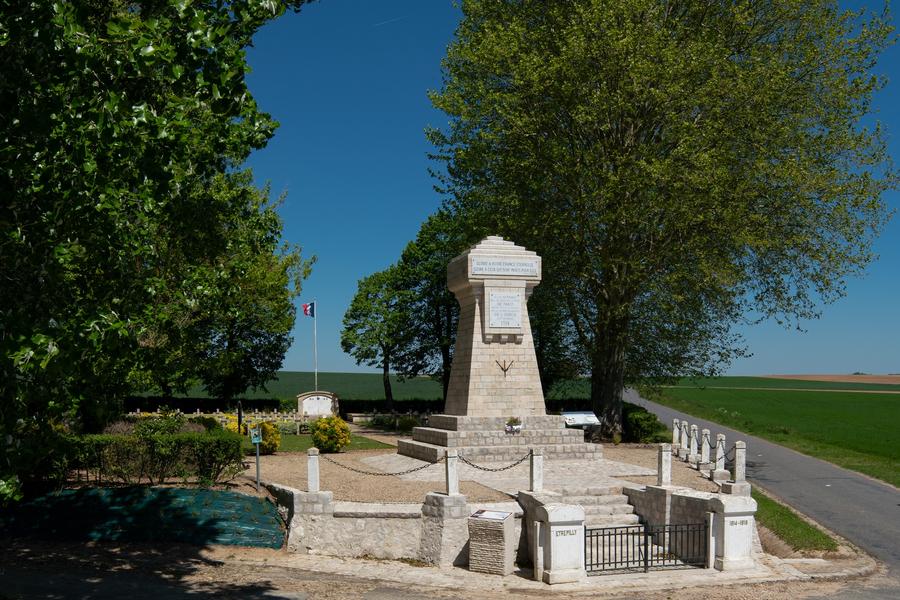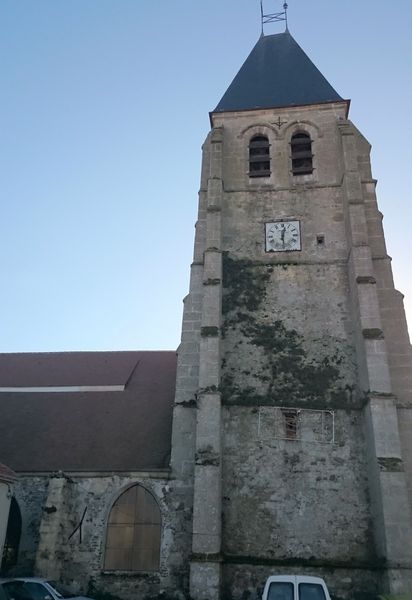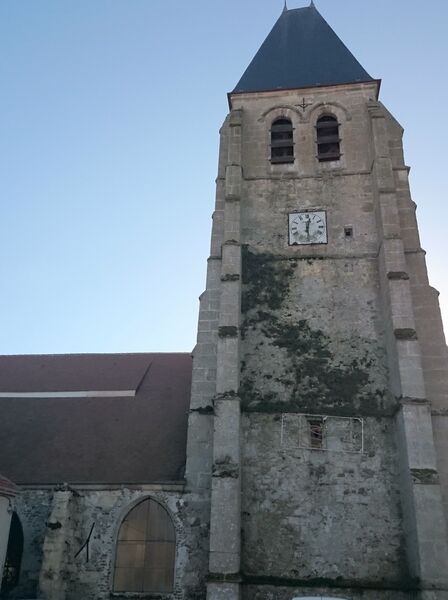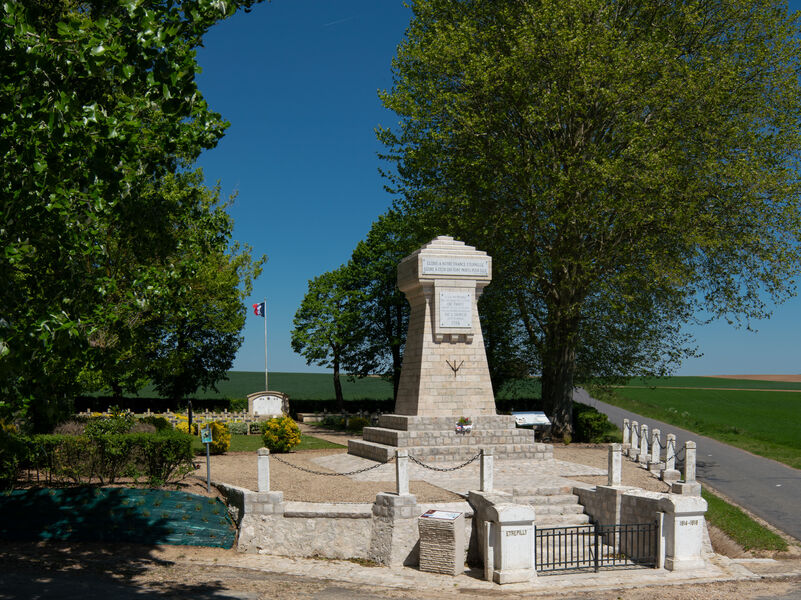


Étrépilly Communal Cemetery
Presentation
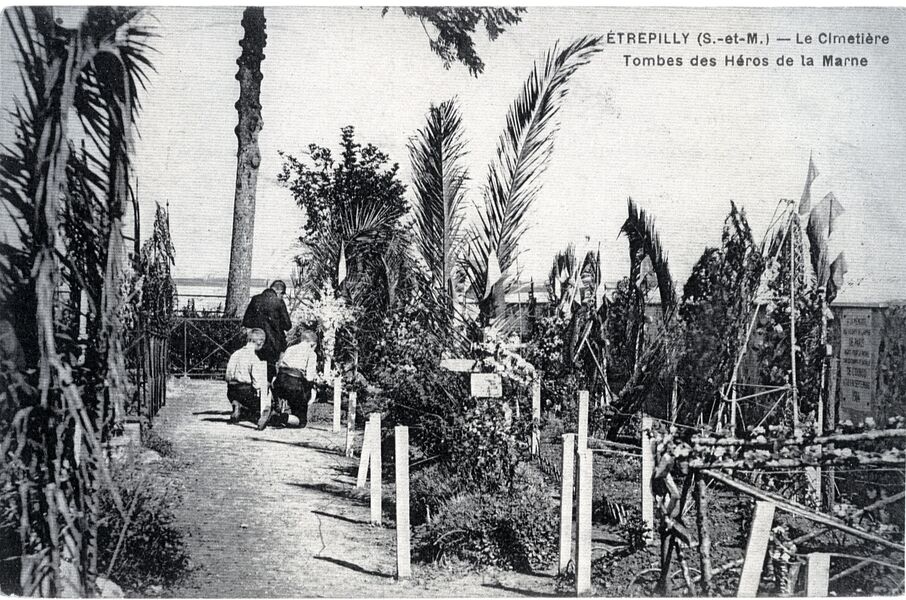
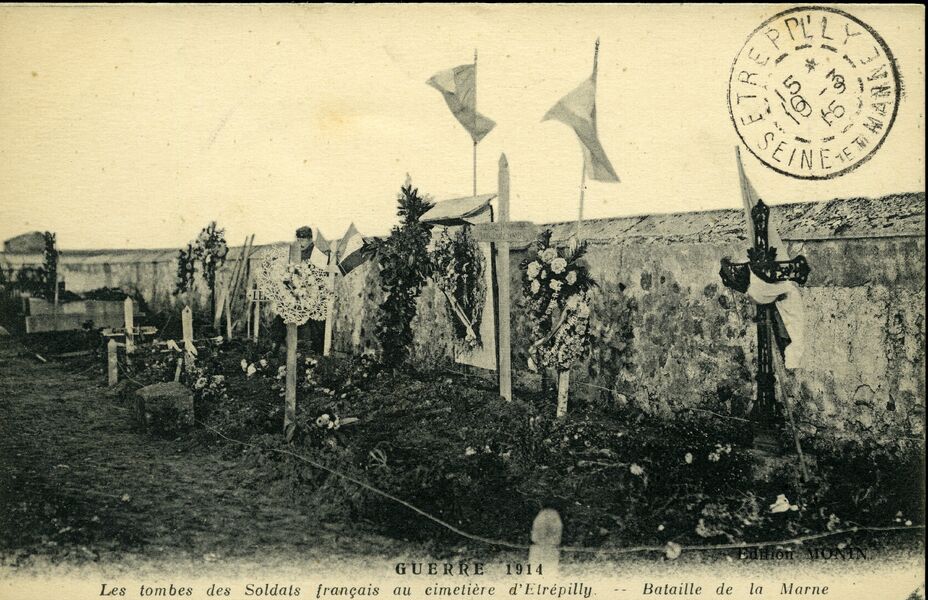
On the night of 7 to 8 September, one of the most famous attacks of the Battle of the Marne took place in the Etrépilly communal cemetery.
At 6pm on Monday 7 September 1914, General Quiquandon ordered the 4th Battalion of the 2nd Zouave Regiment to carry out a night attack on Etrépilly.
Due to the death in the afternoon of the battalion's leader, Henri d'Urbal, the regiment's commander, Lieutenant-Colonel Dubujadoux, was put in charge of this night mission.
The aim was to break through this veritable lock in order to open up a passage through the Thérouanne valley and thus threaten the German artillery positions behind the Trocy-en-Multien, Le Gué-à-Tresmes and Varreddes ridges.
At around 8pm, prior to the attack, French artillery bombarded the village of Etrépilly and the valley floor of the Thérouanne for 30 minutes.
Immediately afterwards, crossing the small river Thérouanne, the Zouaves entered the village.
After some street fighting, they climbed the heights (notably the present-day Chemin des Zouaves) and reached the plateau overlooking the village.
Opposite the Etrépilly cemetery, the battle was illuminated by the glow of a shed fire.
That light revealed to the Germans the weakness of the French troops (half a battalion, plus a reconstituted company, i.e. around 700 men).
The fighting was fierce, with hand-to-hand combat and many dead on both sides.
Lieutenant-Colonel Dubujadoux (54), who had already been slightly wounded twice during the attack on the village, was seriously hit by a bullet to the thigh.
Immobilized, he was unable to retreat. He asked his soldiers to leave him near a millstone, a few metres from the right outer wall of the village cemetery.
At around 10pm, the Zouaves were decimated and had to retreat and evacuate the village of Etrépilly.
On the afternoon of 9 September, the German artillery retreated.
In the evening, a patrol of French cavalry scouts discovered the body of Colonel Dubujadoux at Etrépilly.
On 10 September, near Trocy-en-Multien, at Beauval farm, in the presence of General Quiquandon, commander of the Zouave Brigade, the soldiers emotionally buried their Lieutenant-Colonel Dubujadoux.
The Zouave regiments marched past the grave and paid their respects.
After 1920, Lieutenant-Colonel Dubujadoux's body was transferred to the French national military cemetery in Etrépilly.
French losses were enormous (losses in military terms mean: killed, wounded, prisoners or missing).
At the end of the bloody day and night of 7-8 September, the battalions' losses were as follows:
4th D'Urbal Battalion: 10 officers out of 14 and 584 men out of 1,033 soldiers
14th Dechizelle Battalion: 11 officers out of 20 and 418 men out of 1004 soldiers
The d'Urbal Battalion was disbanded the following day, and the survivors distributed among the other units. Battalion commander Jean Dechizelle took command of the 2nd Zouave Regiment.
This 2nd Zouave Marching Regiment suffered heavy losses at the end of September 1914, near Soissons, on the Crouy-sur-Aisne ridge.
On 22 April 1915, at Langemack, near Ypres, Belgium, the regiment suffered the first German attack using deadly chlorine gas canisters, forming asphyxiating greenish clouds.
In November 1915, the Zouaves regiment was incorporated into General Sarrail's Corps Expeditionnaire d'Orient, and fought in Greece against Bulgaria.
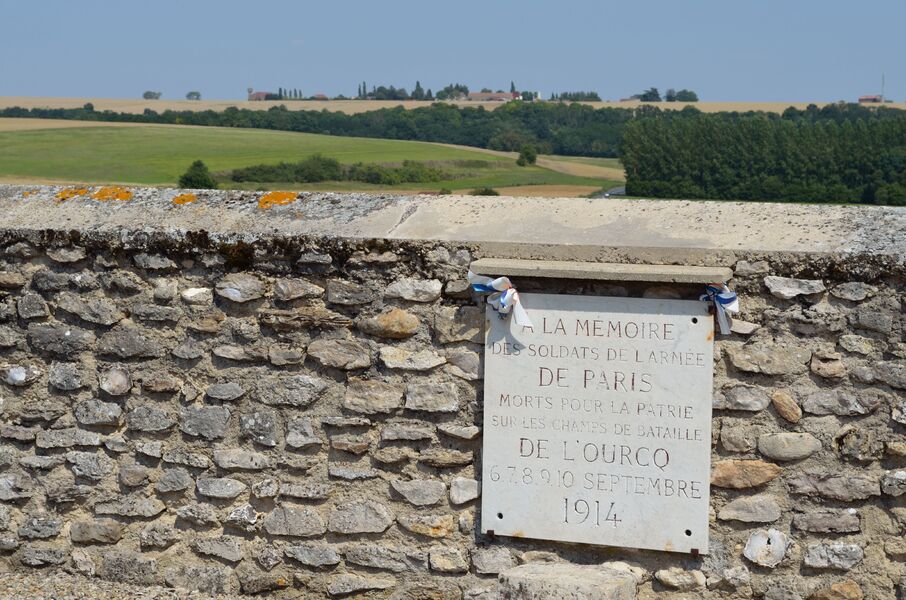
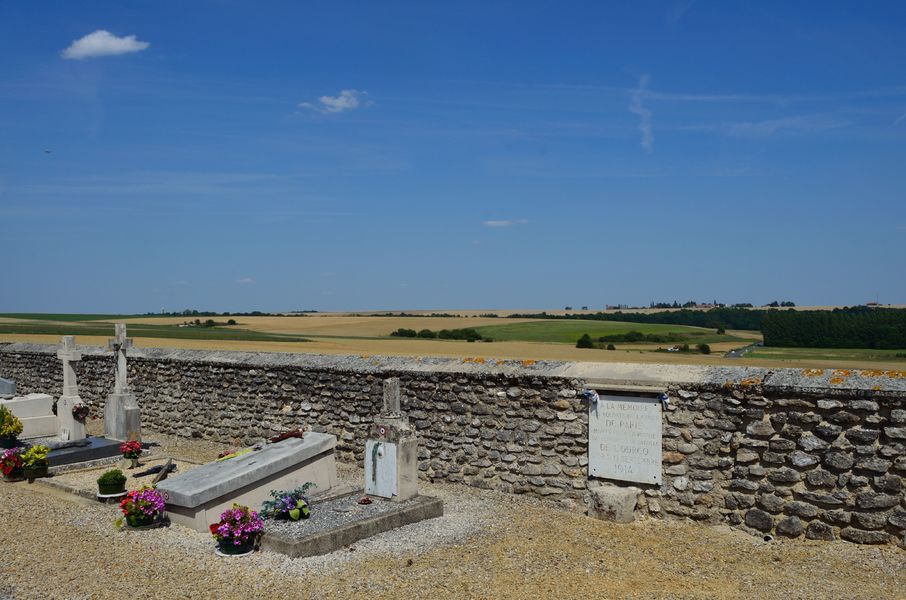
Today, in Etrépilly, there is a street named Rue du Colonel Dubujadoux, and a commemorative plaque on the outside wall of the communal cemetery reads: "Here fell Colonel DUBUJADOUX, who led his Zouaves in driving the Germans from the village of Etrépilly on 7 September 1914, in a night bayonet attack in which he had already been wounded twice.
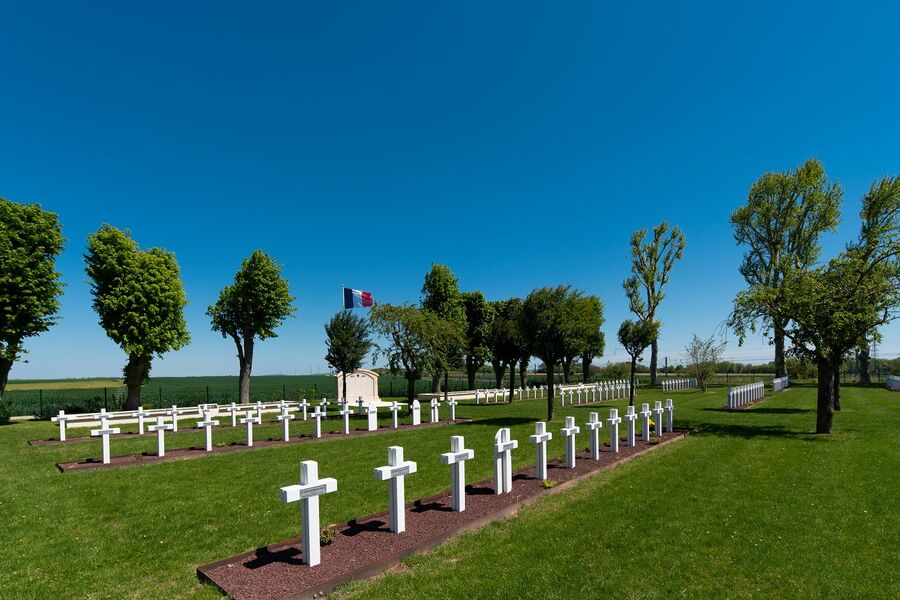
Inside the cemetery: 5 French military graves, all of soldiers killed on 7 September 1914, including Captain Eugène Imbert, of the d'Urbal battalion.
Free access.
All year round daily.
Langues parlées :
French