

New! Introduction to the Game of Palm
Presentation
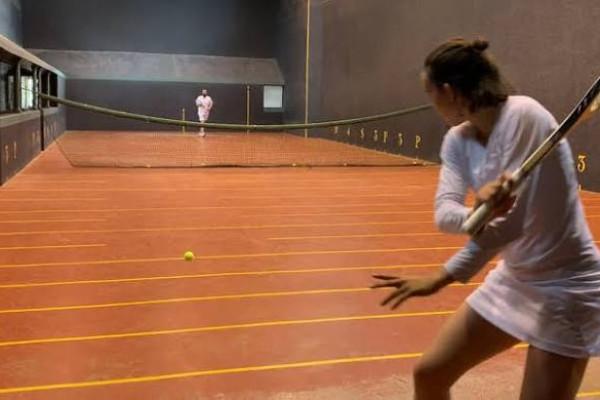
The Fontainebleau Region Tourist Office invites you to come try your hand at jeu de paume, the precursor to modern tennis!
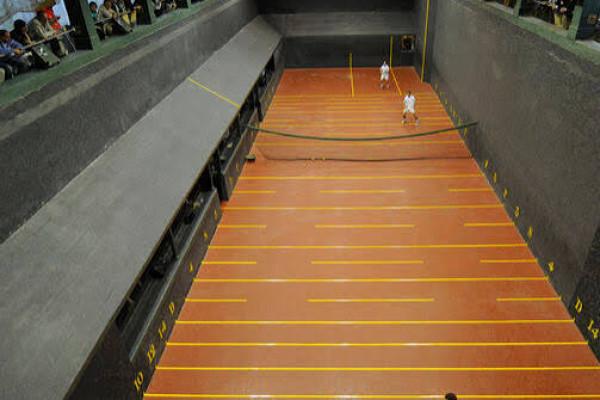
Within the grounds of the Château de Fontainebleau lies one of the few jeu de paume courts still in use in France. Henry IV, along with other monarchs and the finest players of their time, played memorable matches there!
Jeu de paume is the direct ancestor of modern tennis!
It is an intense and tactical racket sport played as singles or doubles in an enclosed hall (the “courte paume”), where players can use the walls to bounce the ball. It is a sport that requires strength, speed, finesse, precision, and skill, but its main characteristic lies in its rules, first defined in 1592, which have remained virtually unchanged since then and leave plenty of room for strategy.
Courte paume emerged in its current form in France between the late 14th and early 15th centuries, but reached its golden age during the Renaissance.
Under the Ancien Régime, courte paume was played by the royal family and the nobility, but also—contrary to popular belief—by the bourgeoisie, tradespeople, soldiers, students, clergy, and others.
Through its cultural influence, the game has also left its mark on the French language with numerous expressions, such as “rester sur le carreau,” “épater la galerie,” “tomber à pic,” and “qui va à la chasse perd sa place,” to name just a few.
Before introducing young and old alike to this sport steeped in history, the master paumier explains its origins, rules, and craftsmanship.
| Tarifs | |
|---|---|
| Full price | 25€ |
Full price: 25 €.
Saturday 20 February 2027 at 2.15 pm.
Saturday 27 March 2027 at 2.15 pm.
Saturday 19 June 2027 at 2.15 pm.
Langues parlées :
French