Saint-Quentin Church
Presentation
Saint-Quentin Church, a memorial to the lords of Passy
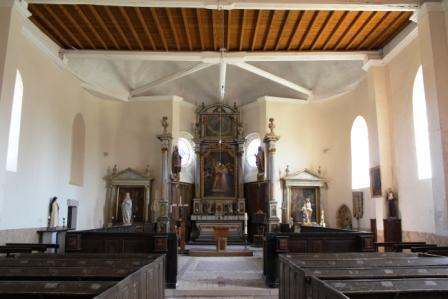
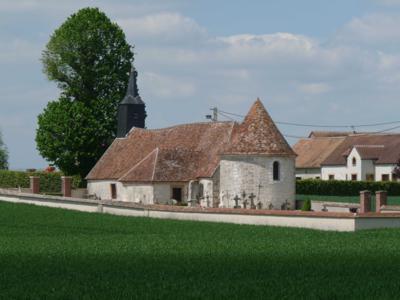
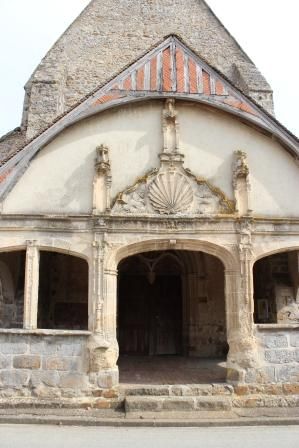
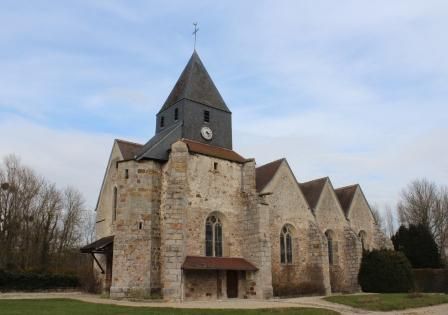
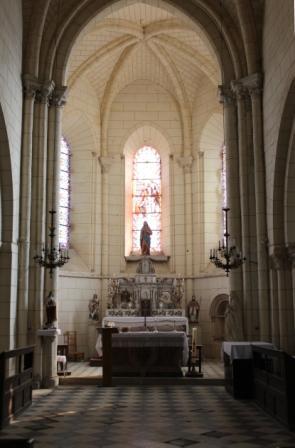
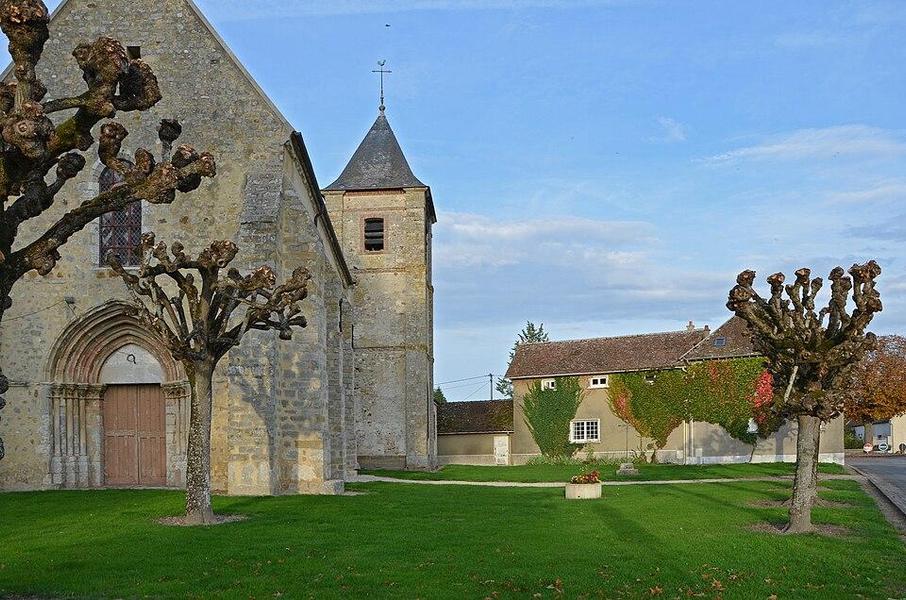
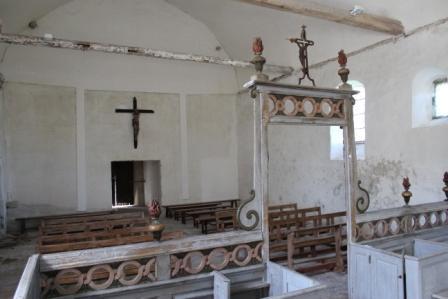
Likely of medieval and castellated origin, the church has undergone various transformations. Originally, the building consisted of a single nave, which was later partitioned on the western side. A massive, imposing bell tower—rebuilt in the 19th century—rises above the western façade. Five round-arched openings in the structure have been walled up, and a buttress was added on the southern side during the 20th century, partially obstructing a window that had been cut into the wall in the 19th century.
The church’s richness is owed to the Veelu family, lords of Passy from the mid-16th to the late 17th centuries; three generations of the family are interred there.
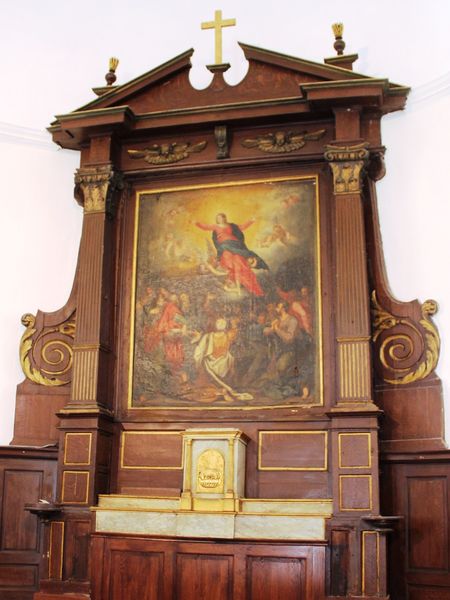
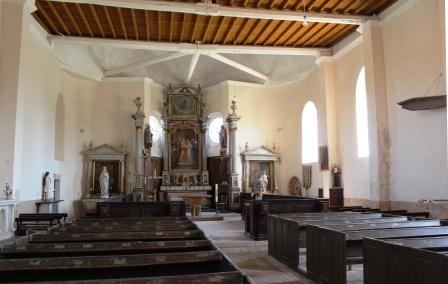
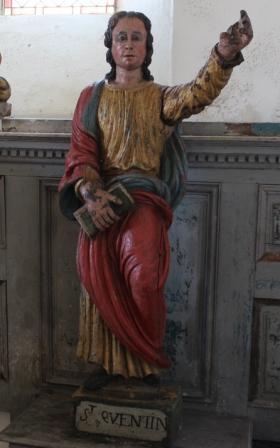
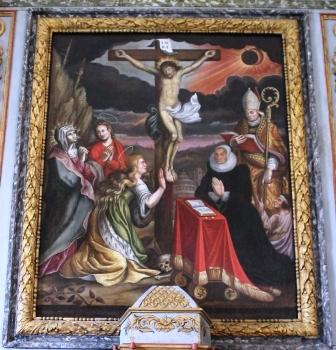
The high altar, complete with its reredos and tabernacle—known as the "Crucifixion Reredos" (dating from the 17th–18th centuries)—serves as the primary decorative feature. Both the altar and the canvas that adorns it were commissioned by Catherine de Veelu, who is depicted alone as a donor at the foot of the cross. Hailing from the Aisne region, she had the church dedicated to Saint Quentin, a figure highly venerated in her home territory. According to *The Golden Legend*, the saint—a native of Rome—traveled to Amiens to evangelize the local population. After being tortured, he was ultimately beheaded, and his body was cast into the Somme River. It was discovered intact fifty years later, and his relics subsequently became the focus of numerous pilgrimages.
Free access.
All year round, daily.
Langues parlées :
French